

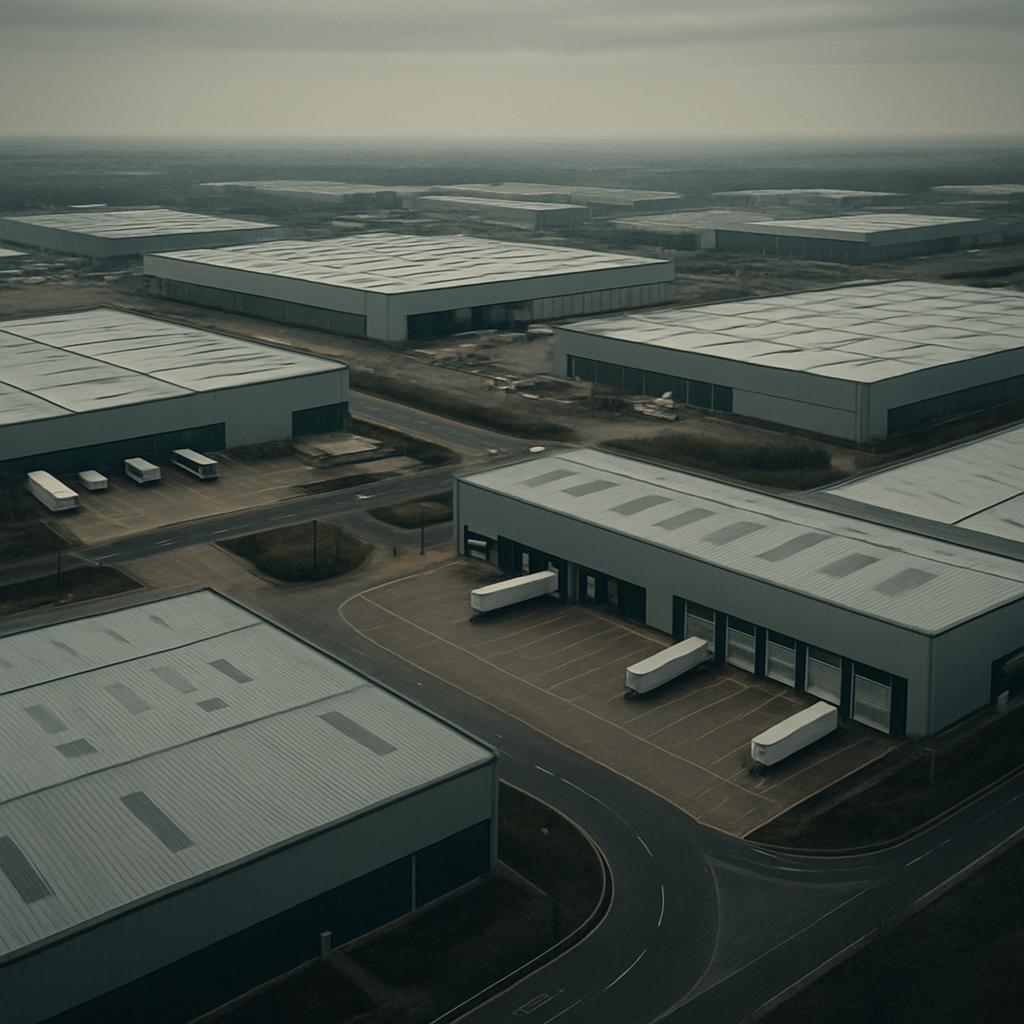
Why Industrial Property Remains Adelaide's Most Misunderstood Asset Class
When most people picture commercial property, they think of office towers and shopping centres. Rarely do they think about warehouses — and that is precisely where the opportunity lies.
At Higher Commercial, we spend every day speaking with investors, business owners, developers and occupiers. Across hundreds of transactions, one trend has become increasingly clear: industrial property is no longer the forgotten asset class — yet many investors still underestimate its long-term potential.
The fundamentals are remarkably simple. Businesses need somewhere to operate.
Whether it's warehousing, logistics, manufacturing, storage, trade services, distribution or e-commerce, industrial property provides the essential infrastructure that keeps the economy moving. While trends come and go, the demand for functional industrial space remains remarkably consistent.
At the same time, Adelaide faces a challenge that cannot be solved overnight: there is only so much industrial land available. Many of the most established precincts — Wingfield, Regency Park, Gepps Cross, Beverley, Dudley Park and Thebarton among them — are effectively built out. New land releases require significant infrastructure investment, lengthy planning processes and substantial capital expenditure before a single building can be delivered.
The result is a supply pipeline that struggles to keep pace with demand — driving strong rental growth while owner-occupier demand places further upward pressure on values.
Despite these trends, we regularly encounter investors who still view industrial property as a secondary asset class. In our experience, that perception creates opportunity.
“Commercial property value is ultimately driven by income. Increase the income, and in many cases, you increase the value.”
Unlike many commercial investments, industrial assets rarely rely on simply waiting for the market to rise. There are multiple avenues to create value. A tired asset can be transformed into a significantly stronger investment through relatively modest capital expenditure.
A vacant tenancy can be leased, turning idle space into reliable, recurring income. An under-rented tenancy can be repositioned, bringing rents back to market to lift the income base. A poorly configured property can be upgraded, with modest capital expenditure that unlocks outsized returns. And a single warehouse can be divided, reworking one asset into multiple independent income streams.
The practical advantages are often underestimated, too. Buildings are generally simpler to maintain. Occupiers tend to remain longer. Fit-out requirements are often less intensive than office accommodation. Leasing demand is broad, spanning local trades and manufacturers through to national logistics operators.
Importantly, the tenant pool is not limited to investors. Many industrial assets also appeal to owner-occupiers, creating an additional layer of demand that can support values over time — particularly across Adelaide, where small and medium-sized businesses continue to seek ownership in tightly held locations.
While office and retail assets often attract the headlines, industrial property continues to benefit from something far more important: strong underlying fundamentals.
We believe the best opportunities are often found where others are not looking. In Adelaide's industrial market, that opportunity continues to be hiding in plain sight.
Considering an industrial opportunity?
Our team can help you identify, assess and unlock value across Adelaide's industrial market. Let's start the conversation.
Get in touch